Business Waste Removal in Richmond
Business waste removal in Richmond should be straightforward, orderly and suited to the way commercial premises actually work. We handle the collection and removal of mixed business waste, with a focus on keeping offices, shops, hospitality spaces and other workplaces clear without creating unnecessary disruption. The service is designed to support regular operations, whether you are clearing a back room, emptying a stock area or arranging a one-off removal before a change of use.
Our approach is practical rather than oversized: we deal with waste streams commonly produced by businesses and keep the process clear from the outset. That can include general rubbish, unwanted furniture, redundant fixtures, packaging and other non-hazardous items that need to be taken away responsibly. If you need to reduce clutter quickly and keep premises usable, this service is built around that outcome. For an initial discussion, use the enquiry route that suits you best and ask for a quotation.
Where items are being removed from working premises, timing and access matter just as much as the clearance itself. We can work around loading bays, shared entrances, tighter schedules and staged clearances, so the removal fits the site rather than the other way round. Pricing and quotes can be discussed alongside the scope of the job, which helps make the next step clearer before any collection is arranged.
Commercial waste clearance for day-to-day operations
Day-to-day business waste often builds up in predictable places: storerooms, print areas, kitchenettes, stockrooms and underused office corners. Clearing it properly means more than simply carrying items out; it means sorting what can be removed, identifying anything that needs separate handling and keeping the working environment tidy while the job is underway. Our business waste removal service in Richmond is aimed at those routine commercial clearances where speed, access and care all need to be balanced.
We can remove general commercial rubbish and mixed non-hazardous items from premises that need a reset rather than a full strip-out. That often includes packaging, broken furnishings, redundant display items, dated office equipment and miscellaneous waste that has accumulated over time. If you are comparing options, consider how much needs to be moved, whether access is restricted and whether the items are stored across more than one room. Clear instructions help create an efficient quotation, and it is sensible to set out any site limitations in advance. If you are ready, request a quotation and explain the type of waste involved.
For businesses that want a broader overview of what can be removed, our business waste removal page sets out the main service in more detail. It is useful for organisations planning a clear-out, a refit or the removal of accumulated waste from a shared site, and it can help you decide whether a simple collection or a more involved clearance is the better fit.
Office clearances and workspace furniture
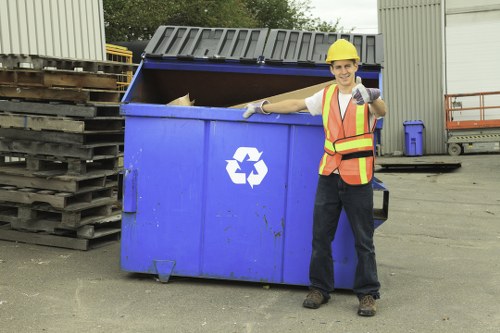
Office clearances often involve a mixture of furniture, documents, small fixtures and general waste, all of which need to be removed in an orderly way so the workspace can continue to function. Desks, chairs, pedestals, shelving, filing cabinets and loose office items can all take up valuable room when they are no longer needed. We help remove those items so businesses can reconfigure a space, prepare for handover or simply deal with clutter that has become difficult to manage.
Where an office contains both waste and reusable items, the main decision is usually how to separate the material before removal. Some businesses want everything cleared in one pass, while others prefer a more selective approach that focuses on unwanted furniture and bulky items first. Our office clearance page is the natural place to look if your priority is a workplace clear-out rather than a general collection, and it can support decisions about what to include in the job.
Useful preparation does not need to be complicated. If possible, it helps to note the number of rooms involved, any items that are particularly large or awkward, and whether there are lift, stair or parking restrictions. Photographs are often helpful because they give a clearer sense of scale, but a written description can also be enough for an initial quotation. A short message that identifies the main items, the access arrangements and your preferred timing is usually a good starting point.
Furniture, fixtures and other bulky items
Bulky commercial items are often the hardest part of a workplace clearance because they take space, weigh more than ordinary rubbish and may need two people or more to move safely. We remove office furniture, reception seating, shelving, cabinets and similar pieces that are no longer needed on site. This type of work is especially useful during refurbishments, relocations and end-of-lease clear-outs, when loose furniture needs to be taken away before other tasks can proceed.
Some businesses prefer to treat furniture removal as a distinct part of the clearance, particularly when the space still contains active stock or equipment. Our furniture clearance page is relevant when the main task is to remove unwanted pieces cleanly and efficiently, while the furniture disposal page suits customers who mainly need the items taken away and processed responsibly. Both can help when a workplace has accumulated more furnishings than it can keep using.
Not every bulky item is treated the same way, and that matters when planning a collection. Some pieces can be dismantled if access is tight, while others are better removed intact to avoid damage to walls, floors or fixtures. Careful handling is important in occupied premises, especially where there are shared corridors or customer areas. Where large items are involved, it is sensible to mention if the route out of the property includes narrow turns, steps or limited parking.
Clearance for mixed sites and storage areas

Commercial waste is not always confined to a single room. It can be spread across basements, rear stores, cupboards, office corners and display areas that have gradually collected items no longer needed. Mixed-site clearances need a service that can deal with different types of waste in one visit without turning the process into a complicated project for the customer. We can help remove the accumulated items that are getting in the way of daily operation.
For premises with storage space, the key questions are often volume, access and sorting. A stockroom or back-of-house area might contain a blend of cardboard, broken fittings, old promotional material and redundant furniture, each of which needs a sensible route out. If your site includes a garage-style store or an outbuilding used by staff, the garage clearance page may also be relevant as a related service category, particularly where the removal is focused on a separate storage space rather than the main workplace.
Sometimes the most efficient job is not the biggest one, but the one that is planned clearly. If there are items you would like left in place, make that clear at the outset so the collection can be organised around them. A brief inventory or room-by-room note can also help when more than one area is involved. That keeps the work focused and avoids confusion on the day of removal.
Specialist waste streams and regulated items
Some commercial waste requires extra care because it cannot simply be treated like ordinary rubbish. That can include certain electrical items, refrigeration units, confidential material, or items that need specific handling because of their contents or construction. The first step is to identify what the waste actually is, then decide whether it belongs in a specialist category. Doing that properly helps keep the collection suitable for the premises and avoids unnecessary delays.
Where businesses need targeted support, related services may be more appropriate than a general clearance alone. Our fridge and appliance removal page is useful for larger electrical items, while confidential shredding may suit organisations dealing with paperwork that should not be mixed with ordinary waste. For materials that need stricter treatment, the hazardous waste disposal page provides a separate option for items that require specialist handling rather than standard collection.
Not every job needs multiple services, but it is sensible to check the category before booking. One clear description of the material is often enough to point the enquiry in the right direction, especially if the waste includes a mixture of ordinary items and one or two special cases. If you are unsure what should be listed, say so in plain terms and ask for guidance when you request a quotation.
Pricing factors and quotation details

The cost of business waste removal is usually shaped by the size of the load, the type of material, the access to the premises and how much labour is needed to remove everything safely. A job from an easy ground-floor loading point is very different from a clearance involving upper floors, long carries or mixed items spread over several rooms. That is why a short description of the site can be more useful than a broad estimate based on appearance alone.
Helpful quotation details normally include the general category of waste, approximate volume, whether any heavy furniture or appliances are included, and whether parking or access is restricted. A few photographs can support the description, but they are not always necessary if the wording is already clear. If you are preparing the job for collection, it helps to keep unwanted items separate from those that must remain on site, especially in working offices or customer-facing spaces.
For businesses that want to compare options before they proceed, the about us page gives a broader view of the company’s general background, while the quotation page is the most direct route for discussing the practical details of a clearance. Either way, the aim is the same: to make the removal easy to understand, properly scoped and ready to schedule without unnecessary back-and-forth.
Recycling, sorting and responsible disposal
Business waste removal is not only about taking items away. It also depends on how the material is sorted after collection, because different waste streams need different treatment. Cardboard, metal, timber, plastics, electrical items and mixed general waste may all be part of the same job, but they should not be treated as identical. A thoughtful approach to sorting can make the overall process more orderly and help direct the waste towards the most suitable route.
Our recycling and sustainability page is useful if you want to understand the broader approach to disposal and reuse. For businesses that are clearing out displays, shelving or desks, it can be helpful to know that some items may be better handled as separate categories rather than thrown into one mixed load. That makes the removal more transparent and gives a better basis for planning future clearances.
When a job includes items of different sizes and materials, the most practical plan is often to set the largest or heaviest items aside first and then gather smaller waste around them. That reduces confusion and can make loading more efficient. Keep a note of anything that must not be removed, especially if the premises are still being used while the clearance is taking place. A clear separation between waste and active equipment makes the process easier to manage.
About Richmond
Richmond upon Thames is a west London town and borough centre on the north bank of the River Thames, with a long history shaped by royal influence, riverside trade and later suburban growth. The area is strongly associated with Richmond Palace, a Tudor royal residence that gave the town much of its early status, although the palace itself no longer survives in full. Today the town combines busy streets, elegant terraces and extensive green space, with Richmond Green forming one of its best-known open areas. The riverfront is a major part of local character, and the Thames Path passes through the district, linking it to Kew, Twickenham and other riverside places. Richmond Park, the largest of London’s Royal Parks, lies nearby and provides broad heathland, woodland and deer habitats within an area long valued for recreation and landscape. The town centre includes a mix of historic and modern architecture, with shopping streets, civic buildings and transport links around Richmond station. There are also cultural landmarks such as the Richmond Theatre, which has been a notable part of local life since the nineteenth century, and the nearby Old Deer Park, which adds further open ground close to the river. The area’s blend of transport access, heritage streets and open scenery gives Richmond a distinct identity within southwest London, combining urban activity with one of the capital’s more celebrated river and park settings.
Flexible support for business premises
Commercial clearances often need to work around opening hours, staff movements and the way a property is used day to day. That may mean coordinating access before trading begins, after customers have left, or during a quieter operational window. We aim to keep the removal process organised so it does not interfere more than necessary with the rest of the premises. The point is to make waste disappear without making the working day harder than it needs to be.
Different businesses also need different levels of involvement. Some want a straightforward removal of waste that is already gathered together, while others need help with a broader sort-out where furniture, paperwork, packaging and redundant equipment are all present in one place. If you are looking at a more complete premises clear-out, the waste removal page and the builders waste clearance page may both be useful, depending on whether your waste is commercial day-to-day material or tied to refurbishment work. Choosing the right category at the outset keeps the quotation more accurate.
If you have a target date for a move, refit or handover, mention that early so the collection can be considered against your timetable. Even where the job is simple, dates, access and volume all matter. Ask for a quotation once you know what needs removing, and keep the description focused on the items that are actually present. That is the best way to reach a practical booking without unnecessary complication.
Get a quotation for business waste removal in Richmond

If you need business waste removed from Richmond premises, the next step is to outline the type of waste, the amount involved and any access details that might affect collection. A concise description is usually enough to begin with, especially when the job involves standard commercial rubbish, office furniture or mixed items from a storage area. From there, a quotation can be prepared around the actual work required rather than a generic assumption.
For many customers, the most useful plan is simple: identify the waste, separate anything that must stay, and choose the service page that best matches the material. That might be office furniture, confidential material, appliances or a broader commercial clearance. Contact us to request a quotation and discuss the removal you need in Richmond.
If you are ready to move forward, send the essentials and we can take it from there. A clear request now can save time later, and it helps turn an untidy workspace into a manageable job with a defined scope. Request your quotation today and set the collection in motion.